The rise of fast interiors: a brief history of disposable design
Interiors have not always moved at the pace they do today. The expectation that we might refresh a room every few years — or even every season — is a relatively recent cultural shift, and understanding how it happened helps us think more clearly about the choices available to us now. To understand how we arrived at a world of flatpack furniture, trend cycles, and regular room refreshes, it helps to look back at the longer history of design.
For centuries, interiors evolved gradually, shaped by local craft traditions and the practical realities of materials and labour. The culture of disposability in the home is not the result of a single brand or decade. It is the outcome of centuries of shifting ideas about design, technology, consumption, and what a home is for.
Understanding this history helps us see that fast interiors are not inevitable. They are a cultural construct — one that can be re-imagined.
Before Speed: Interiors as Status, Craft, and Permanence
For much of history, interiors changed slowly. In periods such as the Baroque and Rococo eras, interiors were expressions of power, religion, and wealth. Rooms were elaborate, layered, and materially rich — combining architecture, art, sculpture, and decoration into immersive environments (Blakemore, 1996). These interiors were not designed to be replaced; they were designed to endure. Materials such as marble, carved wood, plasterwork, and textiles were labour-intensive and expensive, reinforcing the idea that interiors were long-term investments (Praz, 1964).
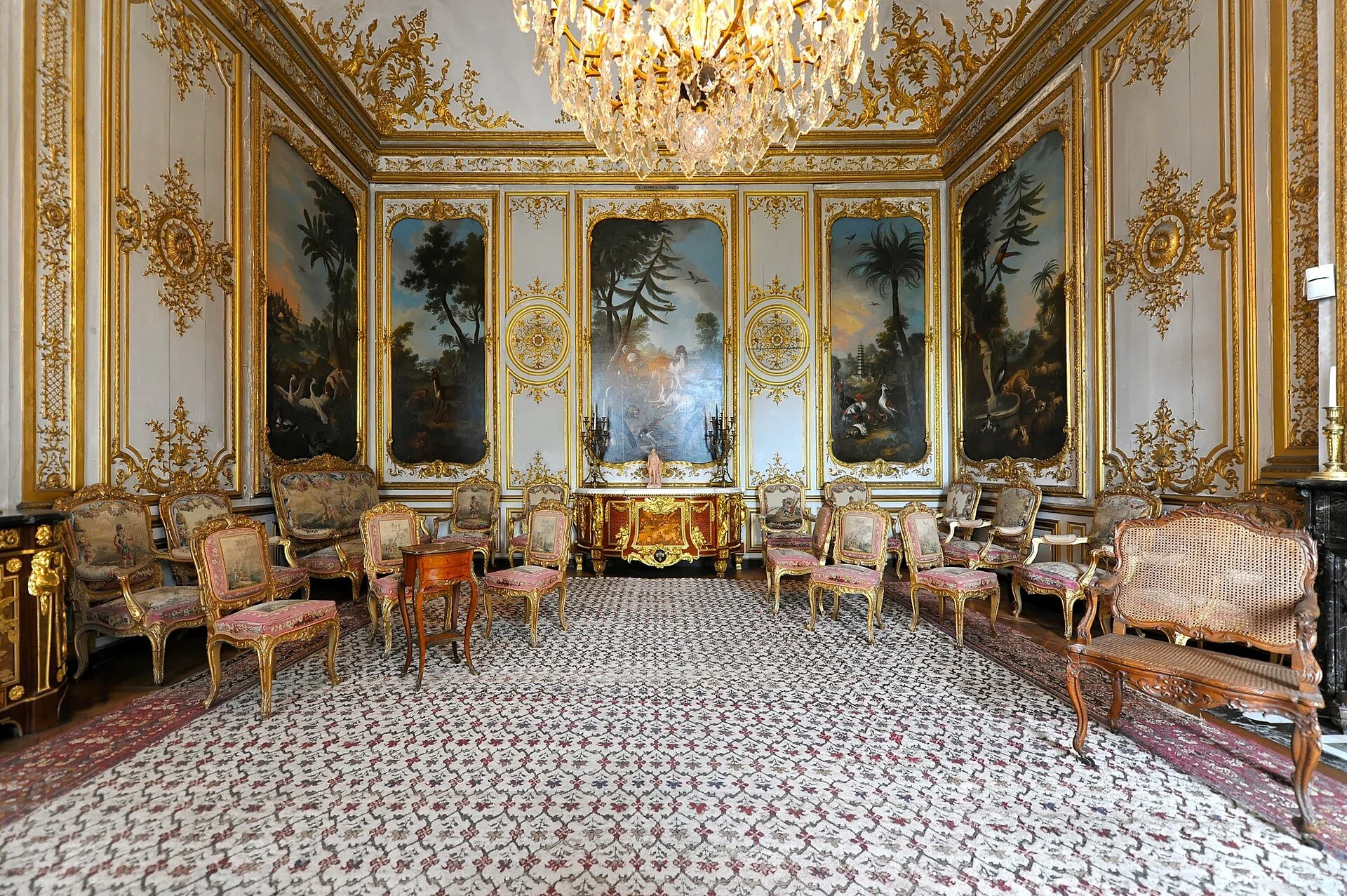
Chateau de Chantilly, photo courtesy of Messian, Gilles (2009)
In Japan, the philosophy of mottainai — a deep sense of regret over waste and respect for the inherent value of things — shaped how objects were made, used, and repaired for centuries (Serafin, 2017). Rooted in Buddhist principles of non-waste and gratitude, mottainai expressed a worldview in which discarding a usable object was a moral failure, not simply an inconvenience. Its most beautiful expression is kintsugi: the practice of repairing broken ceramics with lacquer and gold, transforming fractures into luminous seams rather than hiding or discarding them (Keulemans, 2016, Juniper, 2003). A kintsugi piece is not restored to its original state — it is made more beautiful by its history. The break becomes part of the story. Alongside this sits wabi-sabi, the Japanese aesthetic of finding beauty in imperfection, impermanence, and the marks of age and use — an entire philosophy of interiors built on the opposite of newness (Koren, 1994).
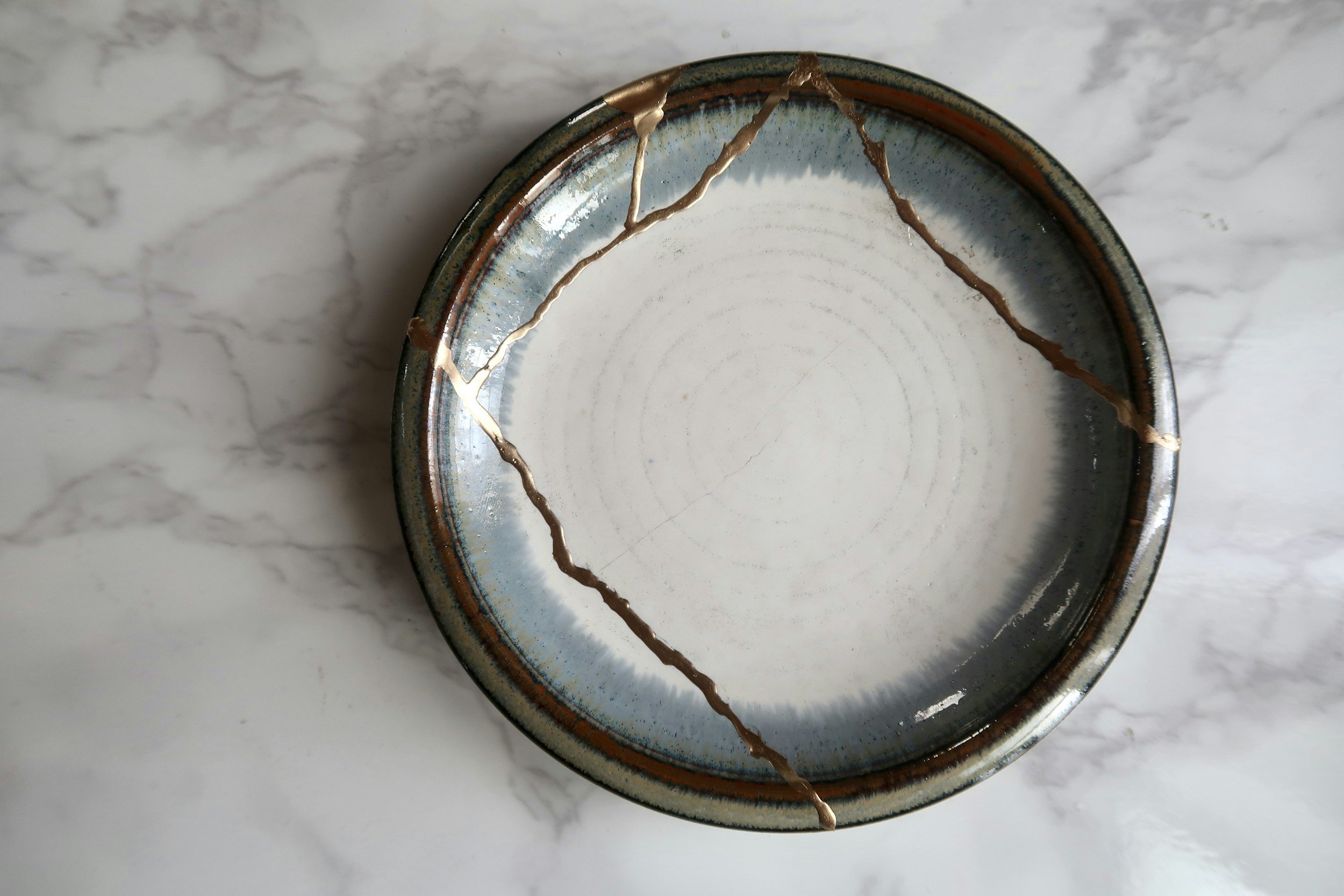
Japanese kintsugi used to repair a bowl
For many Indigenous cultures worldwide, the relationship between people and the materials of their homes was inseparable from their relationship with the land itself. Long before modern sustainability trends, Indigenous communities built homes perfectly adapted to their environments, using locally available materials guided by principles of stewardship and harmony — timber, ice, clay — taking what the landscape offered and returning as little waste as possible. For example, the Sungai Utik of Borneo express their connection to land through the tenet: "The forest is our father, the land is our mother, the water is our blood" — a relationship with natural materials that is sacred, reciprocal, and nothing like the anonymous, globalised supply chains of contemporary interior retail (National Geographic, 2024, Eco-Business, 2020, Equator Initiative, 2020). Many Indigenous peoples understand that caring for the land and environment is a sacred responsibility, where the land, humans, and non-human life are all interdependent — a worldview that shapes how every object within a home is sourced, used, and valued.
Industrialisation: The First Turning Point
The Industrial Revolution fundamentally altered the relationship between people and objects. Mechanised production meant goods could be made faster and more cheaply, allowing decorative items and furniture to reach a broader public (Forty, 1986).
This democratisation of design was transformative — but it also introduced a subtle cultural shift: when objects become easier to produce, they become easier to replace (Attfield, 2000).
The late 19th-century Arts and Crafts movement emerged partly as a reaction to this shift. Its proponents argued for craftsmanship, material honesty, and a closer relationship between homes, nature, and making (Naylor, 1971). They believed the industrial system risked producing objects without meaning or care.
While the movement’s handcrafted pieces were often too expensive for ordinary households, its critique remains strikingly relevant. The tension it identified — between craft and mass production — still shapes contemporary interiors culture (Pile, 2018).
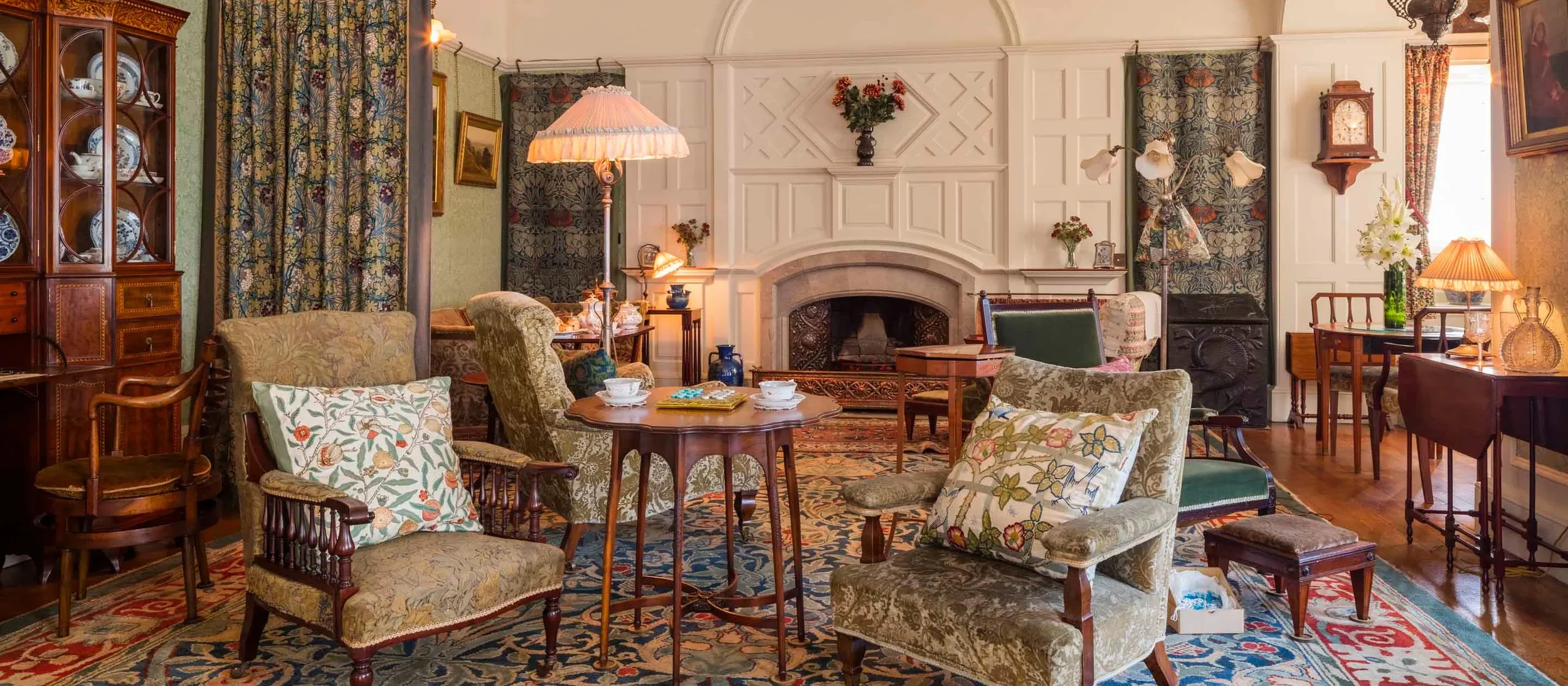
The Drawing Room at Standen House, West Sussex © National Trust Images/James Dobson
Modernism: Efficiency, Standardisation, and the New Ideal
In the early 20th century, Modernism reframed design around efficiency, technology, and social progress. Designers embraced new materials — steel, glass, concrete — and rejected ornament in favour of function (Curtis, 1996). Standardisation and mass production were not seen as problems but as tools for creating better lives. Good design, the modernists believed, could improve society; addressing housing shortages, urbanisation, and changing lifestyles (Sparke, 2010).
This period laid crucial groundwork for fast interiors in two ways:
Design became scalable — objects could be reproduced globally
Aesthetic change accelerated — styles across the world became tied to technological progress and the idea of the new.
Yet modernism also attracted criticism. Some argued that its stripped-back environments ignored the emotional and sensory dimensions of domestic life, producing spaces that felt impersonal (Pile, 2018).
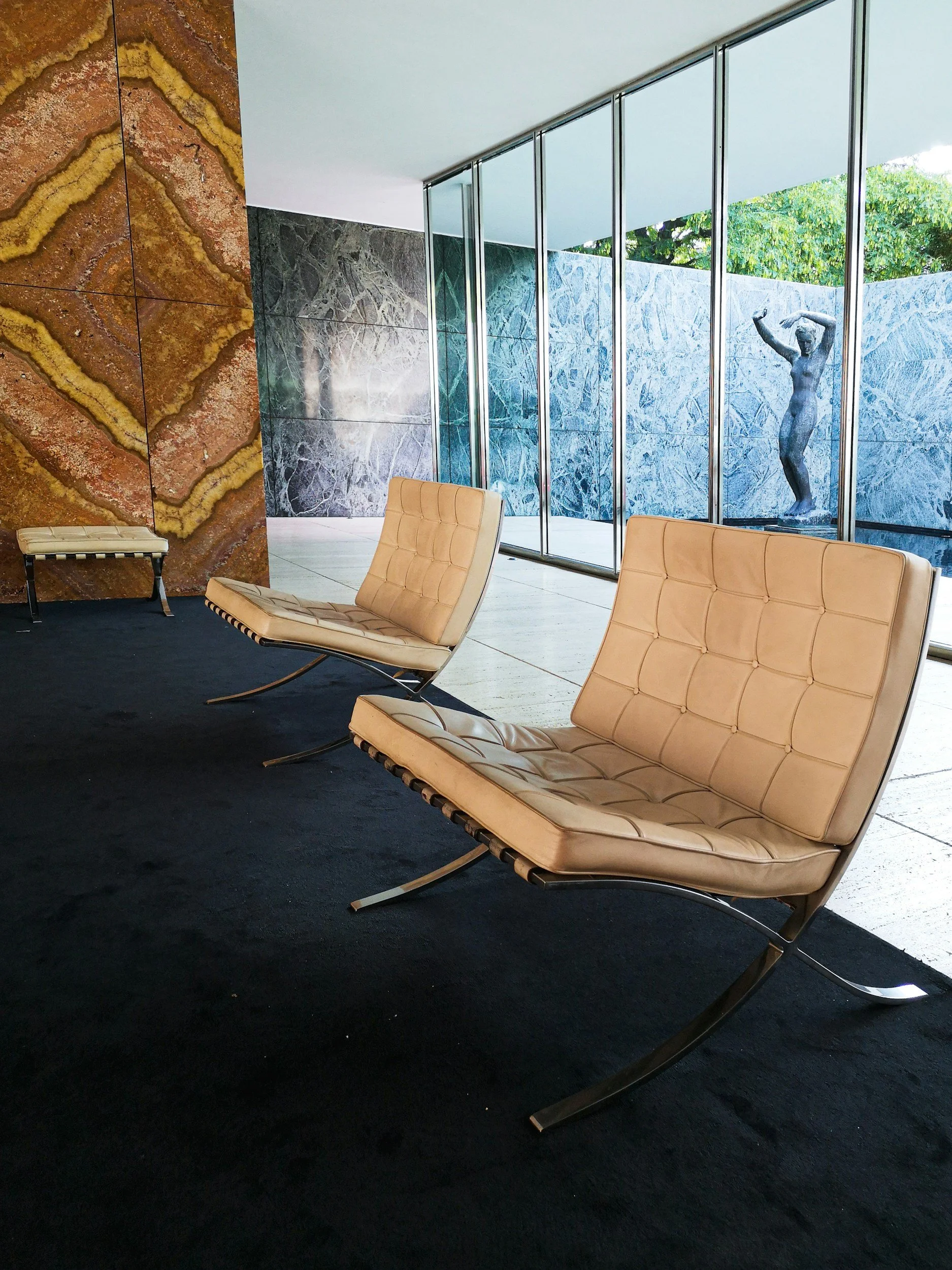
The Barcelona Pavillion designed by modernist pioneer Ludwig Mies van der Rohe in 1929
Post-War Prosperity and the Birth of Consumer Interiors
After the Second World War, economic growth and advances in material science transformed the home dramatically. New materials — laminates, plastics, fibreglass — enabled mass-produced kitchens and furniture to become affordable to the middle classes (Forty, 1986; Sparke, 2010).
The fitted kitchen became a symbol of modern living: hygienic, efficient, and stylish. Modular cabinetry, built-in appliances, and easy-clean surfaces reflected a cultural fascination with progress and convenience (Attfield, 2000).
At the same time, marketing increasingly framed the home as a site of aspiration and identity. Interiors were no longer just functional; they were a way to express modernity and success (McCracken, 1988).
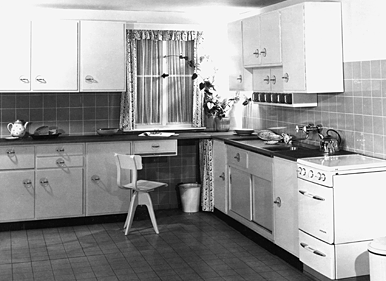
The Form 1000 by Poggenpohl, the world’s first unit kitchen unveiled in 1950
This period marks a key shift: interiors begin to move from long-term possessions to lifestyle products.
By the late 20th century, several forces converged:
Globalised manufacturing reduced costs
Media and magazines spread trends rapidly
Rising incomes increased discretionary spending
Retail innovations made furniture easier to transport and assemble
The arrival of IKEA in the UK in 1987 crystallised this shift. Its model — affordable, flatpack, design-led, globally consistent — transformed what people expected of their homes and how quickly those homes could change. Habitat, founded by Terence Conran in 1964, had already begun translating continental design thinking for a British mass market, introducing the idea that good design was within everyone's reach. Together, these retailers didn't just sell furniture — they sold the idea that interiors were something to update, refresh, and reinvent. In other words, while they democratised access to design, they also normalised short product lifespans (Chapman, 2015).
Design became cyclical. Trends moved faster. The home became a space to express identity through purchase. And the idea that furniture might be temporary — suited to a life stage rather than a lifetime — became culturally embedded (Chapman, 2015; Sparke, 2010).
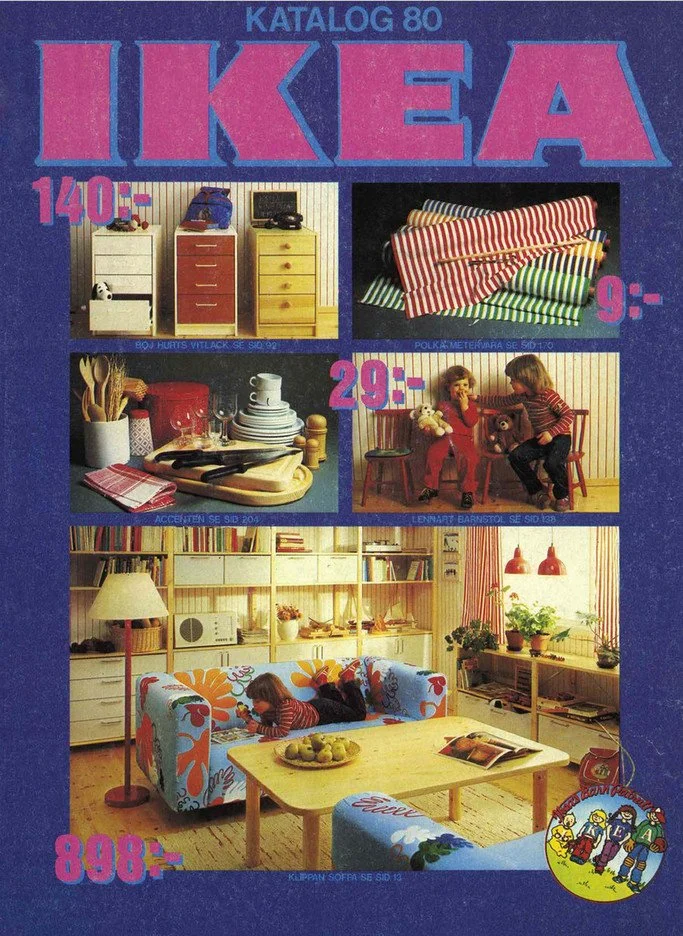
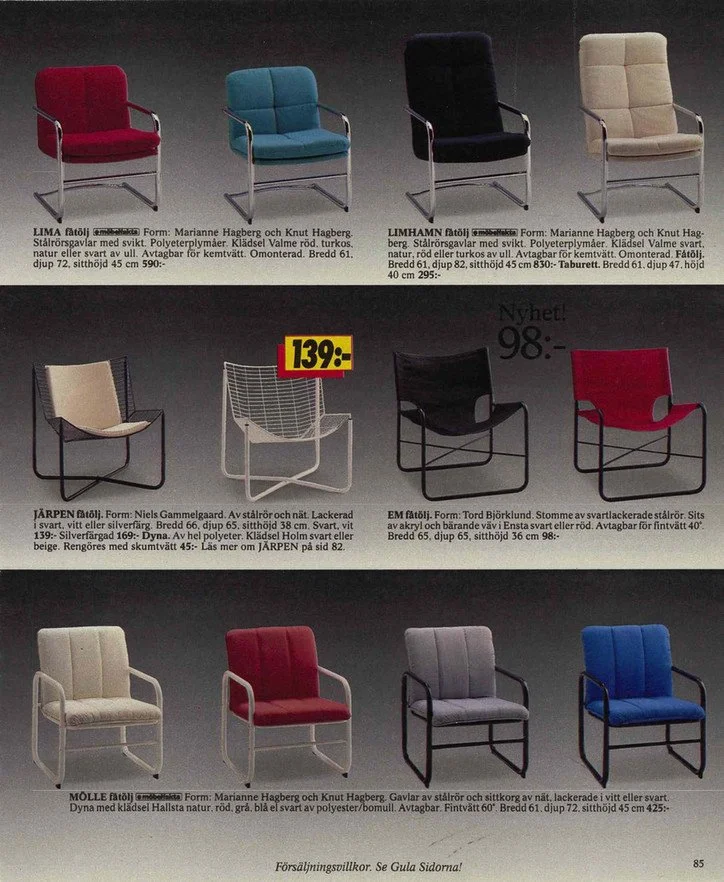
80s IKEA catalogue. Image courtesy of IKEA
The Experience Economy and the Aestheticisation of Everyday Life
In the 21st century, fast interiors accelerated further as digital culture reshaped how we relate to our homes. Social media platforms transformed interiors into visual content, rewarding novelty and aesthetic change (Pine & Gilmore, 1999; Manovich, 2017).
Homes became not just places to live, but backdrops for identity and self-presentation. The result is a subtle but powerful shift: interiors are increasingly evaluated by how they look, rather than how they feel, function or endure.
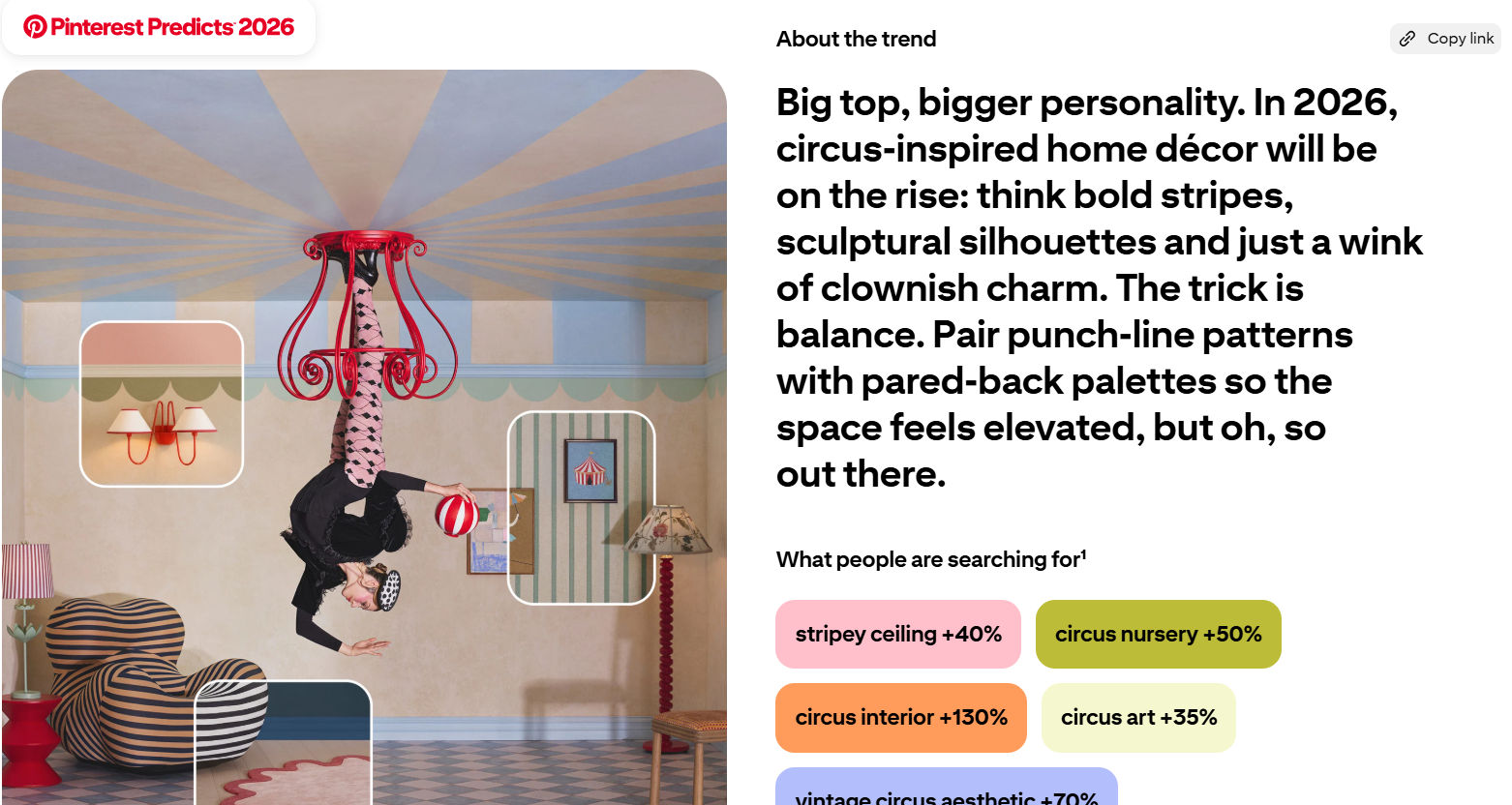
Pinterest Predicts 2026 report highlighting the FunHaus circus-inspired interior trend. Image courtesy of Pinterest
This visual culture amplifies trend cycles and encourages frequent updates — reinforcing a mindset where replacement feels normal, even necessary.
Why Fast Interiors Took Hold
Looking across this history, fast interiors emerge not as a design failure but as a predictable outcome of several long-term trends:
Technological progress making production faster and cheaper
Economic growth increasing consumption
Cultural emphasis on novelty and self-expression
Retail systems designed for convenience and turnover
Media ecosystems that reward visual change
Each development brought genuine benefits — accessibility, choice, innovation. But together they created a system where speed and disposability became the default (Schor, 1998) — and where traditions of repair, craft, and material care were quietly devalued rather than built upon.
The Hidden Costs
Fast interiors carry consequences:
Environmental. Short product lifespans increase resource extraction, manufacturing emissions, and waste. Furniture is one of the fastest-growing waste streams in many countries (Cooper, 2005). Materials that took centuries to form are processed, shipped, assembled, and discarded in a matter of years.
Emotional. When objects are easily replaceable, they are less likely to accumulate stories, memories, or attachment. Homes can begin to feel transient rather than grounding (Chapman, 2015; Lewicka, 2011). The kintsugi principle — that a repaired object is more valuable than a perfect one — becomes a forgotten concept in a world where replacement is cheaper than repair.
Cultural. Craft skills, repair knowledge, and material literacy risk being lost when products are designed for replacement rather than maintenance (Sennett, 2008).

A fast interiors warehouse
A Historical Perspective on Slowing Down
Importantly, history shows that alternatives have always existed. For most of human history, and for many cultures today, the careful use and repair of objects has simply been what you do. Movements such as Arts and Crafts, certain strands of modernism, and contemporary sustainable design all emphasise durability, meaning, and connection to materials (Greenhalgh, 1997).
These traditions remind us that interiors can be places of memory, craft, identity, and ecological responsibility — not just consumers of resources.
From Fast to Meaningful Interiors
Recognising the historical roots of fast interiors allows us to move beyond nostalgia or blame. The goal is not to return to the past, but to integrate the benefits of modern production with older values of care, longevity, and material awareness.
A slower approach might include:
Choosing fewer, better-made items with known origins
Designing for adaptability rather than replacement or obsolescence
Valuing repair and maintenance
Finding beauty in patina, wear, and visible history
Seeing the home as something that evolves and accumulates meaning rather than something periodically reset.
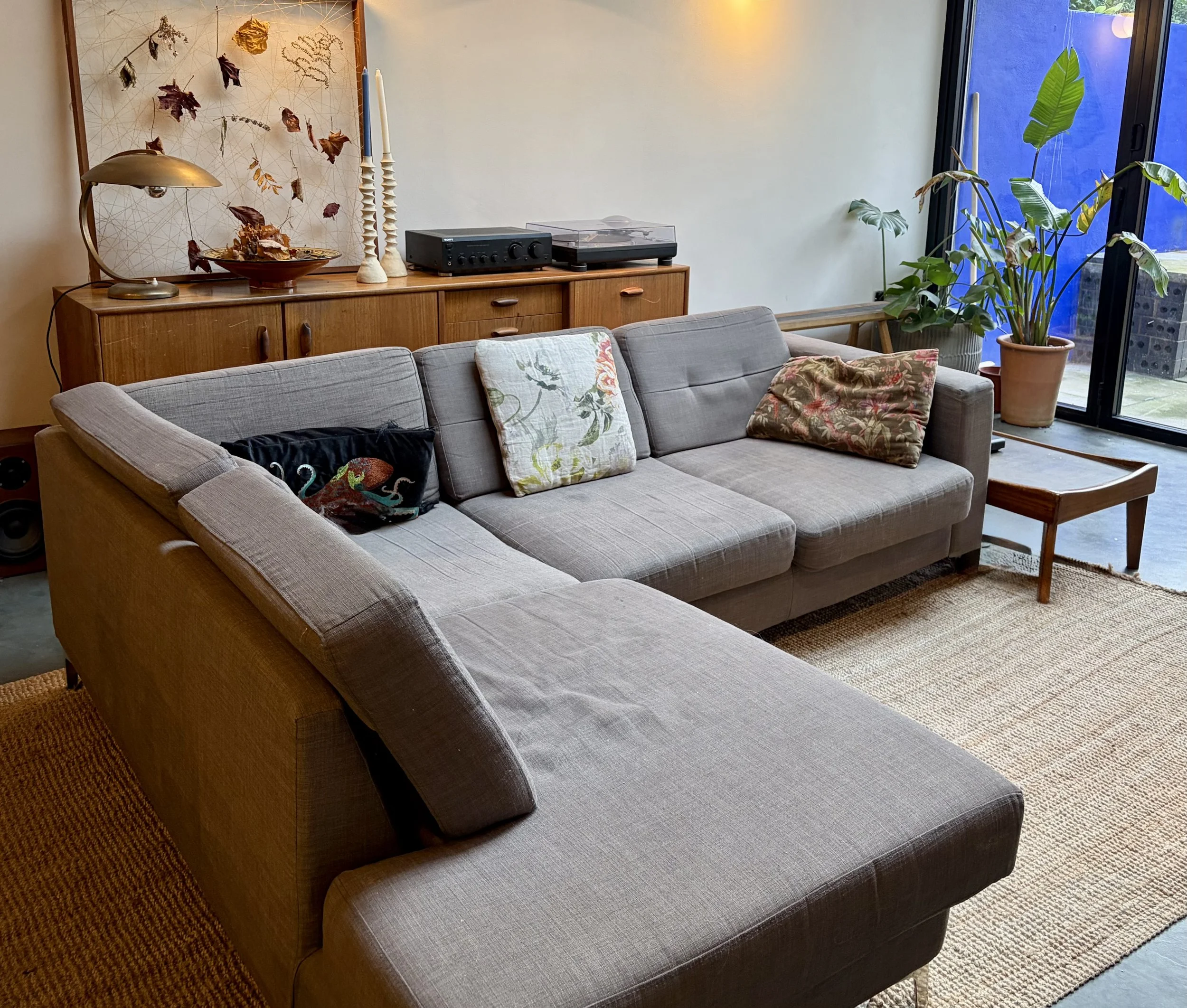
In this sense, the future of interiors may not be about rejecting modernity, but about redefining progress — shifting from speed and novelty toward resilience and meaning.
Conclusion: Fast Interiors Are a Choice
Fast interiors feel normal because they are embedded in our economic systems and cultural narratives (particularly Western narratives). But history shows that our relationship with the home has always evolved.
The same forces that created disposable design — technology, creativity, and changing values — can also help us build a new interiors culture: one grounded in durability, connection, and care.
Earth & Origin exists in the belief that our homes can be more than products of the system. How we design and care for our spaces is not just an aesthetic choice. It is a statement about what we value, and what kind of world we want to live in.
References
Attfield, J. (2000) Wild Things: The Material Culture of Everyday Life.
Blakemore, R. (1996) History of Interior Design and Furniture.
Chapman, J. (2015) Emotionally Durable Design.
Cooper, T. (2005) Longer Lasting Products: Alternatives to the Throwaway Society.
Curtis, W. (1996) Modern Architecture Since 1900.
Eco-Business (2020) After a 40-Year Struggle, Indigenous Guardians of Indonesian Forest Gain Rights Over Their Land. Available at: https://eco-business.shorthandstories.com/indigenous-group-wins-land-rights/
Equator Initiative (2020) Indigenous Group of Dayak Iban Sungai Utik Long House. United Nations Development Programme. Available at: https://www.equatorinitiative.org/2020/04/24/solution10987/
Forty, A. (1986) Objects of Desire: Design and Society since 1750.
Juniper, A. (2003) Wabi Sabi: The Japanese Art of Impermanence. Tuttle Publishing.
Keulemans, G. (2016) The Geo-Cultural Conditions of Kintsugi. The Journal of Modern Craft, 9(1), 15–34.
Koren, L. (1994) Wabi-Sabi for Artists, Designers, Poets and Philosophers. Stone Bridge Press.
Lewicka, M. (2011) Place Attachment: How Far Have We Come? Journal of Environmental Psychology.
Manovich, L. (2017) Instagram and Contemporary Image.
McCracken, G. (1988) Culture and Consumption.
National Geographic (2024) Natural Custodians: Indigenous Lessons in Reconnecting with Nature. Available at: https://www.nationalgeographic.com/environment/article/paid-content-natural-custodians-indigenous-lessons-in-reconnecting-with-nature
Naylor, G. (1971) The Arts and Crafts Movement.
Pile, J. (2018) A History of Interior Design.
Pine, B.J. & Gilmore, J.H. (1999) The Experience Economy.
Praz, M. (1964) An Illustrated History of Interior Decoration.
Schor, J. (1998) The Overspent American.
Serafin, R. (2017) Mottainai: A Japanese Sense of Anima Mundi. National Institutes of Health. Available at: https://pubmed.ncbi.nlm.nih.gov/28093756/
Sennett, R. (2008) The Craftsman.
Sparke, P. (2010) The Modern Interior.
I'm Michelle — founder of Earth & Origin, and I believe the way we design and care for our spaces is part of how we build a better relationship with the natural world, and a better future for our communities. If you've read this far, you might enjoy my others posts below — or subscribe to the newsletter for new writing when it lands.