Nature connection in our gardens
Why gardens at home, on balconies, indoors and in community spaces can be designed not just for growing, but for a deeper relationship with the living world
When people think about gardens and nature connection, they often think first about gardening: planting, pruning, growing food, being outside. All of that matters, but it is not the whole story. A person can garden in a highly functional way without ever feeling particularly connected to the natural world, just as someone can have very little outdoor space and still develop a deep relationship with nature through attention, care, beauty and everyday contact. If nature connection is about relationship, then the question is not only whether we garden, but how our gardens and green spaces are designed to help us notice, feel, care and belong (Lumber, Richardson and Sheffield, 2017; Thrive, n.d.).
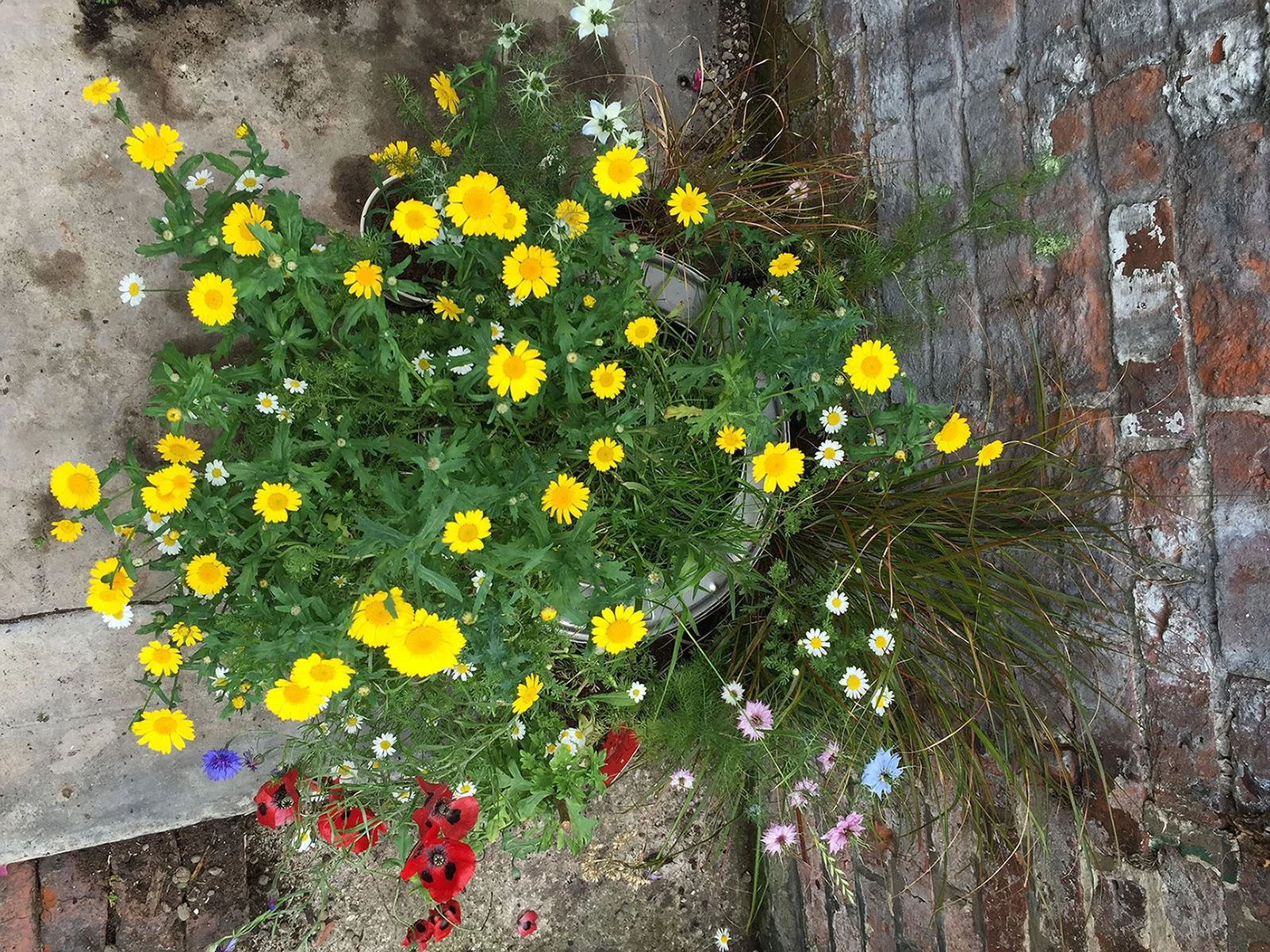
That matters because for many people, gardens are the most regular point of contact with nature. This could be a back garden, a tiny urban yard, a balcony with pots, a windowsill full of herbs, a few well-placed houseplants, or a shared community space. In dense towns and cities especially, these everyday places can become important sites of wellbeing, sensory restoration, ecological care and connection with seasonal change (Sachs et al., 2026; Chalmin-Pui, 2023). The challenge is to move beyond seeing gardens only as outdoor rooms or productive spaces, and to think about how they can actively support relationship with the living world.
It’s about more than adding plants
It is easy to reduce nature-connected design to a checklist: more greenery, more flowers, more time outside. But connection tends to grow through qualities of experience rather than quantity alone. A balcony packed with plants can still feel visually cluttered and uninviting if it has not been designed to invite attention, pause or care. Equally, a simple windowsill with herbs to stop and smell and use in cooking, a view of birds visiting a feeder, or a well-chosen indoor plant placed where it catches the light can create regular moments of attention and relationship. Designing for nature connection means thinking about what helps people slow down, notice seasonal change, engage the senses, feel delight, or experience themselves as part of something living (Lumber, Richardson and Sheffield, 2017; Sachs et al., 2026).
In practice, that could mean:
choosing planting that engages more than one sense: scent, texture, movement, sound and seasonal change.
creating places to sit still as well as places to grow, so that gardens invite observation and calm rather than only activity.
designing for refuge and prospect — a sense of shelter with a view out — so that people feel both safe and connected
allowing some movement and sound through grasses or water
making room for birds, pollinators and other species.
leaving some room for wildness e.g. a patch in your garden that you don’t weed or mow
It can also mean resisting over-design. A garden designed too tightly around control and tidiness can lose some of the very qualities that make it feel alive. Connection often grows where there is a little unpredictability, seasonal change, softness and room for other forms of life to appear.
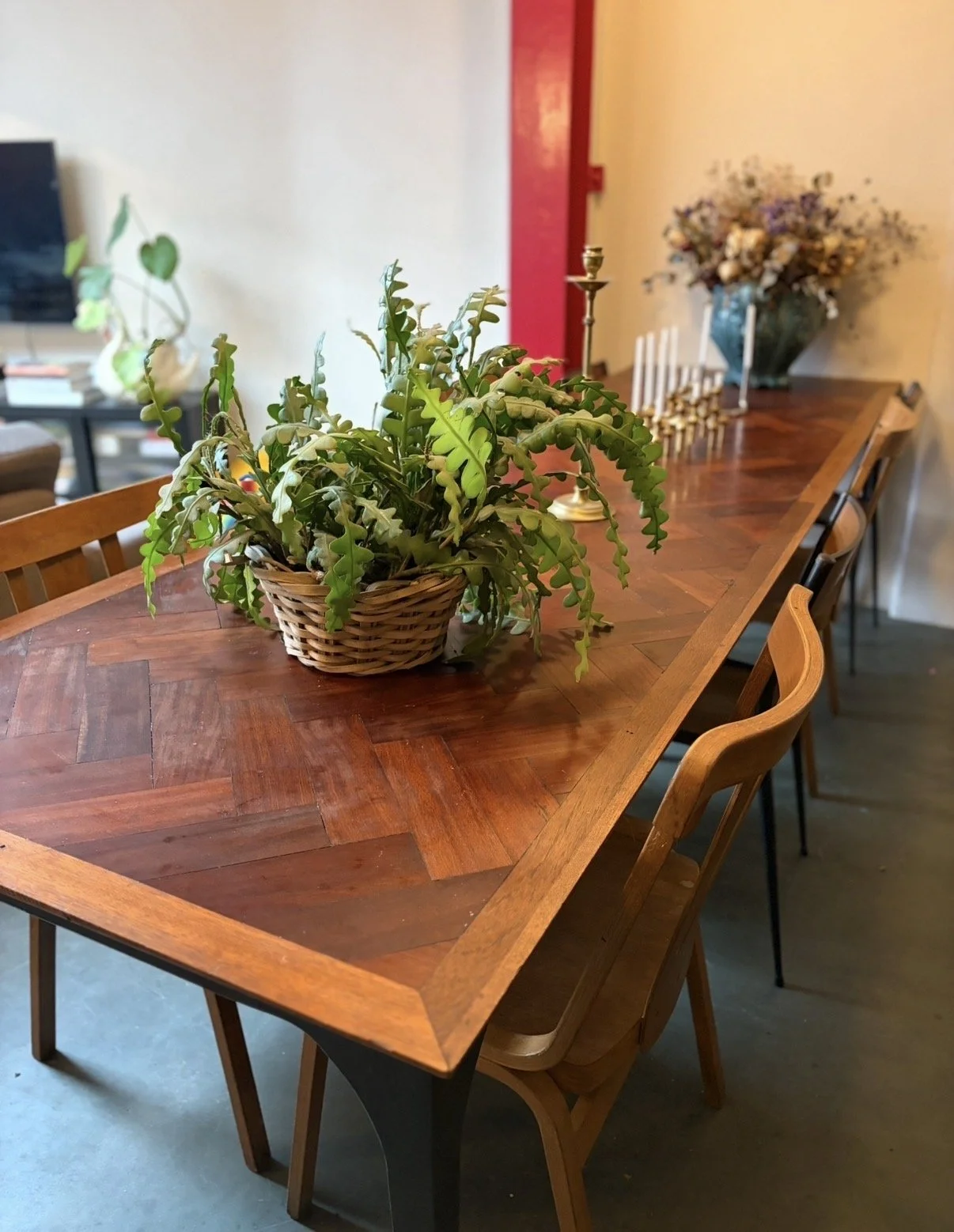
Even indoor spaces can play a role. Natural light, natural materials and visible greenery can make interiors feel more alive and less sealed off from natural rhythms (Chalmin-Pui, 2023; Al Sayyed and Al-Azhari, 2025). A cluster of edible plants in the kitchen, a small indoor propagation shelf, or a corner designed around seasonal observation can all become part of a daily practice of connection rather than decoration.
Shared green spaces can connect people to nature and to one another
Community gardens matter not only because they create green space, but because they can create shared relationship with place. They offer opportunities for stewardship, collective care, intergenerational learning and the kind of repeated contact that helps people feel part of both a community and a local ecology. In urban areas especially, community gardens can become places where biodiversity, food growing, neighbourhood connection and everyday nature experience meet (UN-Habitat, 2025).
But here too, design matters. A community garden designed only for production can miss opportunities for reflection, sensory engagement, inclusion and wildlife support. Designing for nature connection might mean including seating and gathering areas, native or pollinator-friendly planting, quieter corners, flexible access, shared rituals around seasonal change, or spaces for children to explore through touch, smell and observation. It also means thinking beyond the most confident gardeners. Shared green spaces can feel more welcoming when they include multiple ways to participate: growing, resting, watching, making, learning, listening and caring.
Designing for relationships and care
Above all, designing gardens for nature connection means asking a different question. Not just: what do I want this garden to do? But: what relationships do I want this space to support? Between people and plants, people and wildlife, neighbours and shared place, or a person and their own nervous system. Once that becomes the starting point, even very small spaces can begin to feel like sites of belonging, care and reconnection.
Designing for nature connection in our gardens is not only about encouraging people to garden more or spend more time outside. It is about shaping spaces — including those that are small, shared or urban — that help people notice, feel, care and belong.
A balcony, a courtyard, a windowsill, an indoor planting corner or a community garden can all become places where the living world is not just present, but meaningfully encountered. And when that happens, gardens become more than useful or beautiful. They become part of how we repair our relationship with nature in everyday life.
References
Al Sayyed, H. and Al-Azhari, W. A. (2025) Investigating the role of biophilic design to enhance comfort in residential spaces: human physiological response in immersive virtual environment. Frontiers in Virtual Reality, 6, 1411425.
Chalmin-Pui, L. S. (2023) How to optimize garden design for well-being. Psychology Today.
Lumber, R., Richardson, M. and Sheffield, D. (2017) Beyond knowing nature: contact, emotion, compassion, meaning, and beauty are pathways to nature connection. PLOS ONE, 12(5), e0177186.
Sachs, A., Shearing, V., Chalmin-Pui, L., Harries, B. and Griffiths, A. (2026) The Wellbeing Garden Blueprint for Home Gardens. Royal Horticultural Society, London.
Thrive (n.d.) STH and nature connectedness.
UN-Habitat (2025) Healthier Cities and Communities Through Public Spaces.